
HereWeGo
April 10, 2026 • 4 min read
This year, America celebrates 250 years of independence. Join us as we explore the historical sites in Washington D.C. that reveal the nation's rich story.
Celebrating 250 Years of Independence
This year marks a significant milestone for the United States: 250 years since the signing of the Declaration of Independence, which established the country as a free nation. It’s a perfect time for every American to reflect on the people, ideals, and events that have shaped this great nation, while also looking towards the future. And what better place to celebrate than the capital, Washington D.C.?
D.C. is not only home to the federal government and iconic monuments, but it also hides lesser-known tales of American history. Since July 4, 1776, the story of America has largely been written by unsung heroes and unique moments often overlooked in history books. At the six sites listed below, the past, present, and future of America blend vibrantly within D.C.'s rich cultural backdrop.
United States Botanic Garden's National Herb Garden
Within the U.S. Botanic Garden lies the National Herb Garden, one of the largest collections of herbs in the country. Established in 1980 by the American Herb Association, this garden is divided into themed 'rooms' and special areas highlighting the role of herbs in culture and history. Informational plaques throughout the garden share the practical, medicinal, or cultural significance of each plant, from those used in beverages to dyes derived from flowers.
The garden also features collections of specific varieties such as lavender, rosemary, and chili peppers, allowing visitors to experience the diversity of plant classifications.
Frederick Douglass's Study
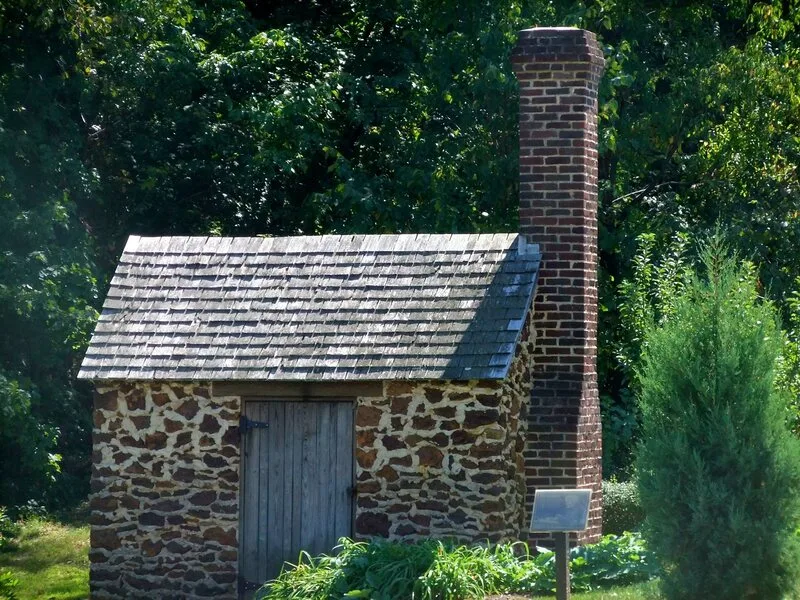
The small stone house on the Cedar Hill property of Frederick Douglass became his favorite spot for reading, writing, and contemplation throughout his career. Douglass kept the room simple, furnished with a sofa, a stool, and a desk cluttered with his books and documents. Many of Douglass's most famous works were likely drafted in this cozy space, affectionately referred to as the 'man cave of the 19th century.'
Today, visitors can step inside a recreated version of this warm little house, built with materials salvaged from the original Growlery and situated in its original location.
✈️ Tìm chuyến bay giá tốt
Đặt vé ngay với giá ưu đãi từ các hãng hàng không
USS Maine Memorial
The mast of the USS Maine, a cruiser that exploded in Havana Harbor in 1898, proudly stands at Arlington National Cemetery, honoring the more than 260 lives lost in the tragedy. Raised from the seabed in 1911, it was brought to Arlington in 1912. Now, the mast rests on a large granite base designed to resemble a ship's cannon.
This mast is inscribed with the names and ranks of those who perished in the sinking, along with a depiction of the ship's bell. On one side, another inscription reads, “Erected to the memory of the officers and men lost in the destruction of the USS Maine in Havana Cuba, on February 15, 1898.”
The Zero Milestone
This small granite structure symbolizes lofty goals for the future of America when it was erected in 1923. Supported by Dr. S. M. Johnson, a proponent of the burgeoning Good Roads movement, the milestone was designed to mark the center from which road distances across the country could be measured—a timely goal in the early days of America’s booming automobile era. Johnson drew inspiration from the Golden Milestone of ancient Rome, located in the Forum, which marked the starting point of the vast Roman Empire's road system.
Although the grand vision of this milestone never truly materialized, it remains a geographic reference point for several local measurements.
Comte de Rochambeau Monument
This monument dedicated to the famous hero of the French Revolution is located in Lafayette Park to affirm the positive relationship between France and America. Following tensions between the two countries during the Spanish-American War in 1898, France sought to demonstrate that they held no grudges and were ready to restore friendly diplomacy. President Theodore Roosevelt and members of Congress, along with military and civilian representatives from France, dedicated the Rochambeau statue in 1902 at the southwest corner of the park.
Peirce Mill Spy Station
During the Cold War, D.C. was filled with secret spaces for government activities, such as this attic area in Rock Creek Park. This small space atop an old garage became a hub for intelligence officers monitoring eavesdropping equipment aimed at consulates (and snapping covert photographs). Meanwhile, the ground floor of this space was home to an arts collective known as Art Barn. The building's use as a spy station was only revealed in 1992 when the Washington Post interviewed the Art Barn executive about the peculiar neighbors upstairs.
In the same article, the Post reported that all spying equipment had been cleared from the facility the previous year when the Cold War ended.
HereWeGo
HereWeGo is a leading online flight booking platform in Vietnam, providing accurate and up-to-date travel information. We are committed to delivering wonderful travel experiences with the best prices on the market.