
HereWeGo
June 11, 2026 • 4 min read
Explore Monemvasia, an ancient town built within a massive limestone rock, rich in history and unique cultural heritage.
Overview of Monemvasia
Somewhere along the southeastern coast of the Peloponnese peninsula, a colossal limestone rock rises dramatically from the sea. From the mainland, only a small part of this town is visible, hidden behind thick stone walls. To reach Monemvasia, you must traverse a narrow path, passing through an iron gate set into the sturdy walls, and suddenly step into a space inhabited since the sixth century.
The Journey to Monemvasia
Monemvasia, which means "single entrance," is aptly named. There aren’t many ways to access this place; you won’t find cars or modern neighborhoods nearby. The Myrtoan Sea stretches beneath you, and the only sounds you’ll hear are footsteps, soft conversations, and the whisper of the wind.
Your arrival at Monemvasia will be unlike reaching other Greek towns. From the modern village of Gefyra on the mainland, you can drive or walk across a short bridge to the base of the rock. The ancient town is nestled against steep cliffs that rise about 100 meters above sea level. Founded by Emperor Maurice in the sixth century, its strategic layout is palpable.
Unique Architecture
A grand gate awaits you at the end of a zigzagging path carved into the rock. After passing through a low, arched tunnel, the town unfolds before you. Stone houses line the narrow, winding streets. Above, on the plateau, a fortress surrounded by walls houses ancient relics, including the 12th-century Hagia Sophia, which stands out against the coastline.
Monemvasia has experienced many historical phases under the dominance of various empires, including Byzantine, Venetian, and Ottoman. The architectural influences from each period are still evident throughout the town. Venetian buildings lean against Byzantine churches like Elkomenos Christos and Panagia Chrysafitissa, creating a rich cultural tapestry.
Exploring the Medieval Streets
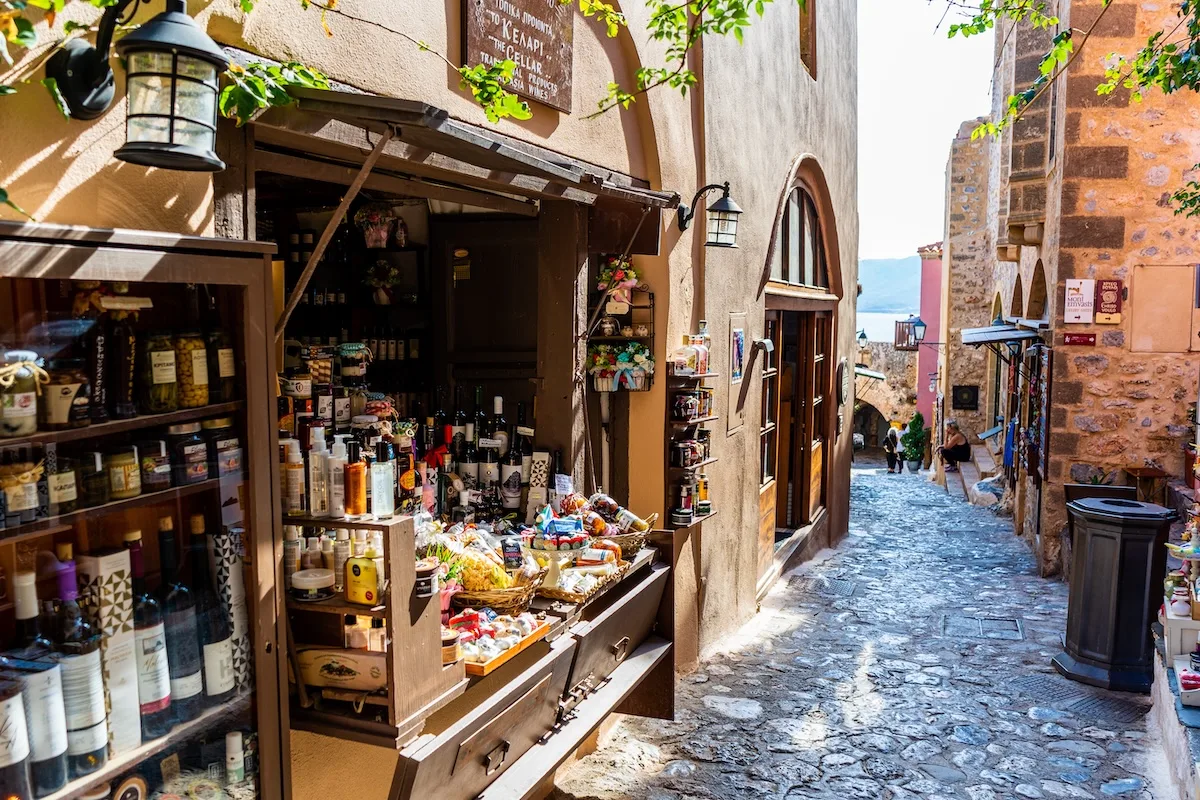
You’ll spend most of your time wandering on foot, as the distances may be short but are full of charm. The lower town features a main cobbled street with alleys branching off on either side. Cafés and tavernas occupy restored stone buildings, some with balconies overlooking the sea. Don’t miss out on trying local Greek dishes like grilled fish, regional cheese, and fresh meals prepared with herbs from the surrounding hills.
✈️ Tìm chuyến bay giá tốt
Đặt vé ngay với giá ưu đãi từ các hãng hàng không
Be sure to sample a glass of Malvasia, a sweet wine that hails from this region and was once transported throughout the Mediterranean. Meals here typically range from 100,000 to 200,000 VND. The churches are easily recognizable and free to enter, with highlights including the Elkomenos Christos church, which features a 14th-century depiction of the Crucifixion, and the serene Chrysafitissa nestled among the homes.
Endless Views from the Plateau
If you can make your way up to the higher town, be prepared for a 20-minute walk along a rugged stone path. Although much of the fortress has been destroyed, the views from the summit are expansive and unforgettable. Hagia Sophia sits right next to the cliff, with nothing separating you from the waters below. On a clear day, you can see all the way to the shores of Laconia.
This route has a significant incline, so wear sturdy shoes and bring water—especially if you visit in the summer.
What Sets Monemvasia Apart
If you’ve wandered through other ancient towns in Greece, where the old town is just a few blocks surrounded by modern buildings, Monemvasia is a world apart. This rock creates a distinct boundary: one moment you’re outside, and the next you step through the gate into a medieval world, with the sea enveloping you on three sides. The town has about 15 permanent residents. Tourism boosts the economy, but it’s never as crowded as Santorini or Mykonos.
Visiting in spring or early autumn, you might encounter only a handful of people here, and you might even feel as though you have the fortress area to yourself. The cobblestone streets absorb sound, and the light dances between the ancient stone walls over time. Many compare Monemvasia to Mont-Saint-Michel, and indeed, it’s a fair comparison. Both are fortified, perched on rocky outcrops, connected to the mainland by a single path, and have a distinct history reflected in every stone.
However, Monemvasia feels cozier, quieter, and fortunately, less commercialized than other places.
What makes Monemvasia special is its peculiar blend of being both enclosed and expansive. You are surrounded by walls and rock, yet the sea is always present through arches and rooftops.
This article is adapted and compiled from: Touropia
HereWeGo
HereWeGo is a leading online flight booking platform in Vietnam, providing accurate and up-to-date travel information. We are committed to delivering wonderful travel experiences with the best prices on the market.