
HereWeGo
June 7, 2026 • 3 min read
Explore the vibrant Potash Ponds in Utah, where stunning colors meet unique salt extraction processes. This is a must-visit destination.
Potash Ponds: A Colorful World in Utah
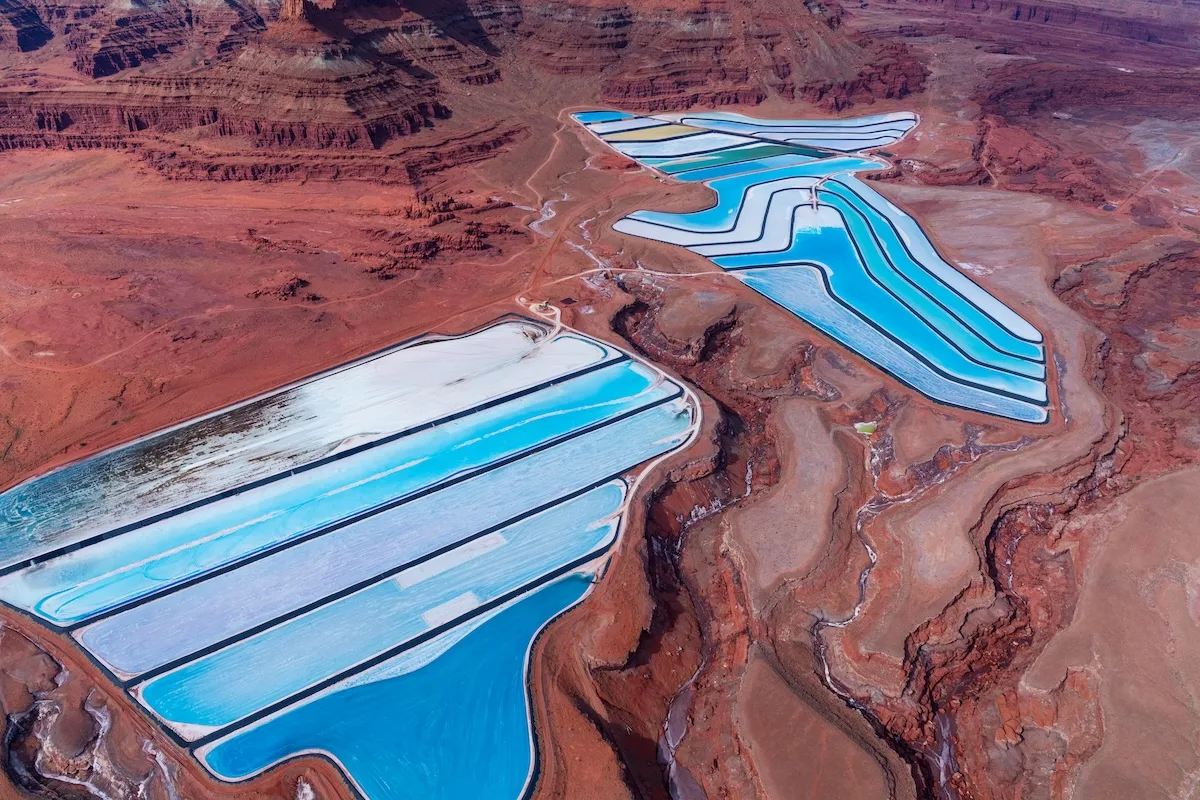
As you journey from Moab to Canyonlands, amidst the rugged beauty of the red desert, you’ll stumble upon something truly unimaginable. Bright blue ponds, resembling swimming pools set in the middle of the desert, stand out against the backdrop of dry rock and sand. This is not an illusion; these are the Potash Ponds in southeastern Utah, a peculiar destination that has captivated travelers for decades.
How the Potash Ponds Work
These ponds are not a natural phenomenon; they are a part of the potassium salt mining process. Intrepid Potash, Inc. pumps potassium-rich brine from deep within the Paradox Basin to the surface. Workers spread this brine across shallow ponds and let the sun do its magic by evaporating the water. The vibrant colors of the water aren’t natural either; they’ve added green dye to enhance sunlight absorption and speed up evaporation.
Over approximately 300 days, the water in the ponds gradually evaporates, crystallizing into potassium chloride. These crystals are then harvested and processed into potash, primarily used as agricultural fertilizer. In fact, around 93% of the potash produced worldwide is used in fertilizer blends.
The Scenery from the Ponds
As the water evaporates, the colors of the ponds change. Newer ponds appear bright blue, while older ones shift to shades of green, turquoise, or even rusty brown as minerals concentrate. From a distance, the scene looks surreal—almost artificial—when standing quietly beside the Colorado River, with majestic sandstone cliffs in the background.
The Best Way to View the Potash Ponds
Potash Road—officially known as State Route 279—is the famous local route to experience. This 17-mile stretch begins north of Moab, adjacent to US-191. The road hugs the Colorado River, passing through towering sandstone walls. Along the way, you’ll encounter rock art, climbing spots, and even dinosaur footprints before reaching these evaporating ponds.
✈️ Tìm chuyến bay giá tốt
Đặt vé ngay với giá ưu đãi từ các hãng hàng không
The bright blue waters speak for themselves, but be sure to view them from behind a safety fence. Make sure to stop at pullouts that are wide and safe—some sections can be quite narrow. For an elevated view, head to Dead Horse Point State Park. From here, you can look down about 2,000 feet over the river, and when the sky is clear, the Potash Ponds stretch across the canyon floor like pieces of a beautiful mosaic.
Early morning is the best time for viewing; the water’s blue almost glows against the red rocks. Although there is a fee to enter the park, the viewpoint is relatively close to the parking area. Combining both experiences in one morning makes for an exciting adventure. Start with Potash Road for a closer look, then hike up to Dead Horse Point for the panoramic view.
Important Considerations
However, keep in mind that these ponds are privately owned. You should only move along public roads and designated viewpoints. If you plan to use a drone, be sure to check the latest regulations, as there may be strict rules near the mining area.
With these unique highlights, the Potash Ponds are not just a perfect spot for photography, but they also offer an insightful glimpse into mineral extraction in Utah, along with the region’s natural diversity. Don’t miss the chance to visit if you find yourself in Utah!
Article reference and editing from source: Touropia
HereWeGo
HereWeGo is a leading online flight booking platform in Vietnam, providing accurate and up-to-date travel information. We are committed to delivering wonderful travel experiences with the best prices on the market.