
HereWeGo
June 4, 2026 • 3 min read
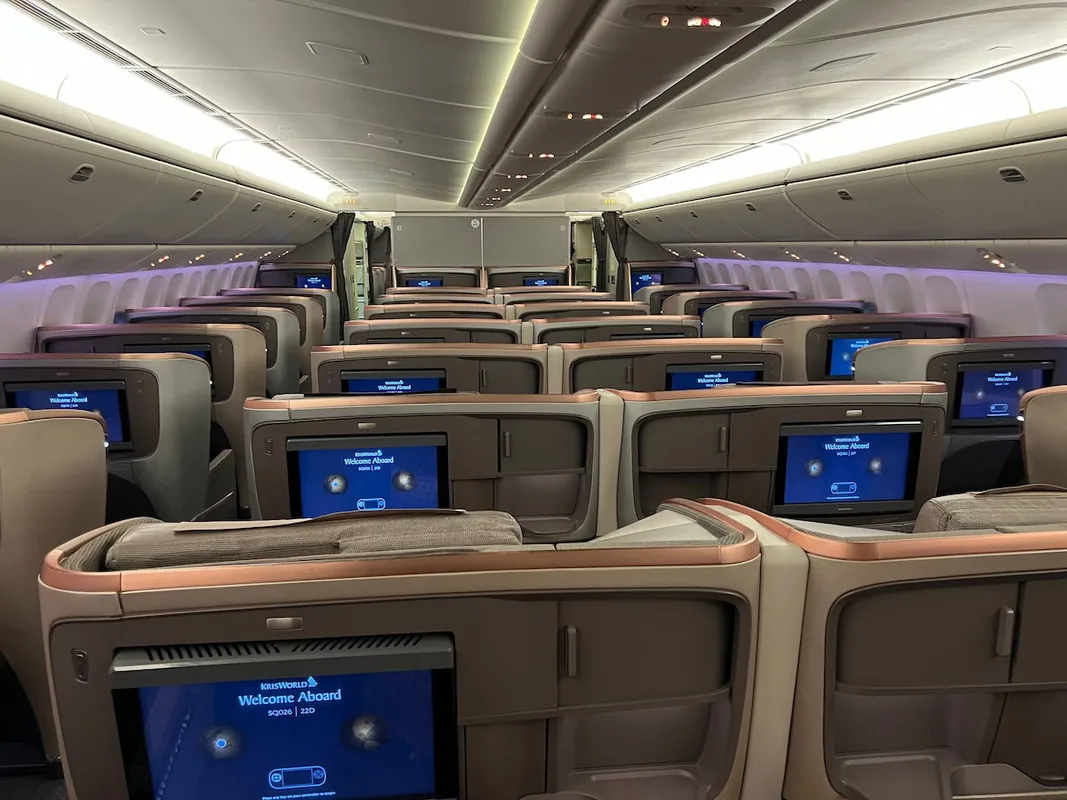
Singapore Airlines has revamped its business class seat allocation policy. What does this mean for passengers, especially those booking budget tickets?
Overview of the New Policy
In recent years, airlines have been updating their seat allocation policies in premium cabins, and Singapore Airlines, known for its top-notch service, is no exception. Recently, the airline has made a surprising change to its business class seat allocation policy.
On June 2, 2026, Singapore Airlines implemented a significant shift in its business class seating policy. Previously, passengers could select their seats for free at any time. However, the situation has changed: seat selection now depends on the type of ticket purchased and membership status.
Details of the New Policy
Under the new policy, certain ticket types allow passengers to choose any available seat, while others restrict selection to specific seats at the time of booking. Passengers booking Flexi and Standard business class tickets, as well as Access award tickets, can still select any seat in the cabin. However, those booking Business Lite, Saver, or Advantage tickets can only choose from a limited selection of seats.
PPS Club members still enjoy the privilege of selecting any seat without restrictions based on their ticket type.
The Issue of Blocked Seats
Notably, a significant number of business class seats are blocked. For instance, on the Airbus A350-900ULR, the first nine rows out of a total of 17 are blocked. Similarly, on the Airbus A380, the first 11 rows are also blocked, and other aircraft models like the Boeing 777-300ER and Boeing 787-10 have many rows blocked as well.
A major question arises: is this policy a new tactic to encourage passengers to opt for more expensive tickets, or is it a first step towards profiting from business class seat allocation?
✈️ Tìm chuyến bay giá tốt
Đặt vé ngay với giá ưu đãi từ các hãng hàng không
What Does This Mean for Passengers?
For passengers, this means that those booking the cheapest business class tickets will only be able to select seats at the back of the cabin before boarding. Fortunately, within 96 hours before departure, all passengers will have the opportunity to choose any remaining seats.
This approach may not be the usual way to enforce seat allocation restrictions, but at least it doesn’t seem to come with any profit-driven motives just yet.
Helpful Information for Vietnamese Travelers
For Vietnamese travelers planning to fly with Singapore Airlines, understanding this new policy is crucial. If you are flying from Vietnam to Singapore or other regional destinations, be sure to check your ticket type before booking.
Before planning your trip, keep in mind the following important information:
- Visa: Vietnamese citizens do not need a visa for stays in Singapore under 30 days.
- Cost: Business class ticket prices can range from 20 million VND to 50 million VND depending on the time of booking. Don’t forget to compare prices before purchasing!
- Time Zone: Singapore is 1 hour ahead of Vietnam.
- Transportation: From Vietnam, you can fly directly from Hanoi (HAN) or Ho Chi Minh City (SGN) to Singapore in just about 2-3 hours.
Conclusion
Overall, the new policy from Singapore Airlines regarding business class seat allocation will affect how passengers choose their seats. If you are a fan of Singapore Airlines' business class, pay attention to these changes and plan your trip accordingly.
Stay tuned for updates!
This article is referenced and edited from: One Mile at a Time
HereWeGo
HereWeGo is a leading online flight booking platform in Vietnam, providing accurate and up-to-date travel information. We are committed to delivering wonderful travel experiences with the best prices on the market.