
HereWeGo
May 26, 2026 • 3 min read
Explore how cities around the world are implementing car restrictions to enhance living environments. These car-free city models are setting new trends for modern urban living.
Introduction to the Car Ban Trend
Approximately 80% of Americans currently reside in large cities, and globally, this number stands at 57% and is steadily rising, according to United Nations data. In this context, major cities like New York, London, and Brussels have introduced congestion charges to improve traffic conditions. However, an increasing number of smart cities are realizing that simply imposing fees is not enough. They have gone further by banning gasoline vehicles and self-driving cars.
Paris: A Pioneer in Anti-Car Initiatives
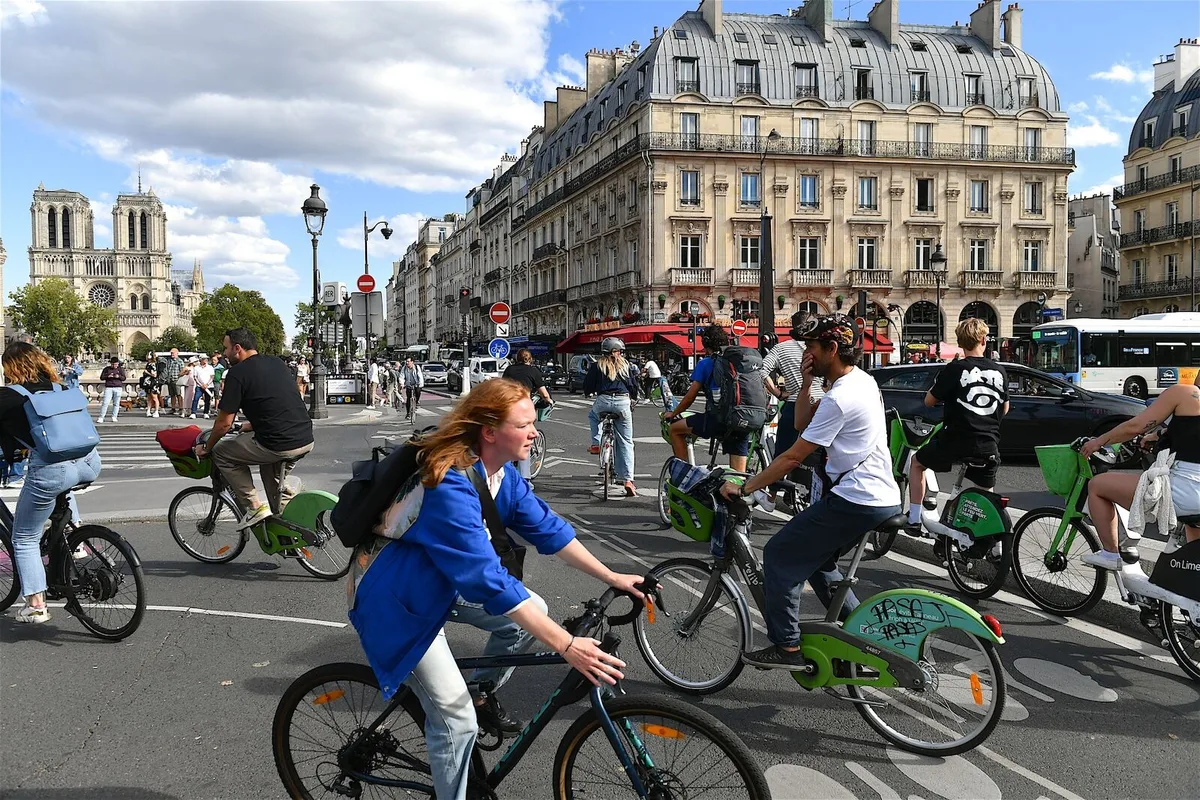
Paris is aggressively transforming its city center into a car-free zone. Starting in November 2024, the city will officially close several major roads to vehicle traffic, allowing only residents, delivery services, taxis, and ambulances. Over the years, Paris has restricted traffic on many sections of the Seine River, removed tens of thousands of parking spaces, and expanded cycling infrastructure. According to The Washington Post, the number of vehicles in Paris has decreased by about 45% since 1990.
Pontevedra: A Model Car-Free City
Pontevedra, a small city in Spain, stands as a clear example of designing a city center around people rather than cars. Over the past 20 years, Pontevedra has gradually eliminated vehicle traffic in its downtown area, allowing only essential services and residents' vehicles. As a result, car usage has dropped by 40%, and once-bustling squares have transformed into ideal pedestrian spaces.
Madrid: A Super Low Emission Zone
On November 30, 2018, Madrid announced its city center as a “super low emission zone,” banning many gasoline vehicles manufactured before 2000 and diesel vehicles before 2006. According to El Pais, traffic decreased by one-third on the first day of the new regulations. By 2020, regulations are expected to tighten further as other Spanish cities plan similar initiatives.
Oslo: A City Without Parking
In Oslo, public parking spaces have been entirely eliminated. The city government has prioritized pedestrians and public transport by cutting 700 parking spots in the central area. Many roads have been redesigned to minimize or completely eliminate car traffic, aiming for a more pedestrian-friendly city.
✈️ Tìm chuyến bay giá tốt
Đặt vé ngay với giá ưu đãi từ các hãng hàng không
Hamburg: A Green Plan for the Future
Hamburg, with a population of 1.8 million, is in the process of restructuring its city center to make walking and cycling easier. The city aims to create a “Green Network,” where vehicles are absent, facilitating easy access for residents and visitors to commercial areas and green spaces through an interconnected park network.
Ghent: A Car-Free City Model
Ghent, Belgium's third-largest city, has enforced a car ban in its city center since 1996, transforming it into a friendly pedestrian and cycling zone. Ghent's early efforts have become a model for many cities today.
Car-Free Days
Many cities worldwide have not yet implemented a full car ban but have organized car-free days. Cities like Paris, Bogotá, and Mexico City have successfully reduced traffic by prohibiting cars on specific days. In Paris, the first Sunday of each month is designated as a car-free day. Bogotá has turned many main roads into car-free pathways every Sunday, creating a vibrant festival atmosphere.
Useful Information for Vietnamese Travelers
If you're planning to visit these cities, be aware that getting around may be quite different from what you're used to in Vietnam. To visit Paris or Madrid, Vietnamese travelers need to apply for a Schengen visa, which costs around 150-200 EUR (approximately 4-5 million VND). Flight prices from Hanoi or Ho Chi Minh City to Paris range from 15-20 million VND for a round trip, and similar costs apply for Madrid. Consider using public transport or joining tours to save on travel expenses and experience urban spaces more effectively.
Article adapted from: Matador Network
HereWeGo
HereWeGo is a leading online flight booking platform in Vietnam, providing accurate and up-to-date travel information. We are committed to delivering wonderful travel experiences with the best prices on the market.